Risk management, Public health matters, risk communication and perspectives on the Sustainable Development Goals(SDGs2030)

Trending

Wednesday, 11 January 2017

Uganda: Setting of Consultation Fees Is Not Solution to Unaffordable Healthcare

Whiteribbonalliance.org
The medical council as per Daily Monitor of January 9 proposed to set doctors' consultation fees in a bid to address the issue of patients being detained or denied services because of inability to pay medical bills. The medical council is getting it wrong with this preposition on three accounts that is; this doesn't address the root cause of patients' inability to reimburse for medical services, secondly will make the business environment for healthcare anti-competitive and finally drive more high quality doctors out of medical practice in Uganda.


The first question that should have been asked is why are people unable to afford healthcare? While the answer to this might be multi-dimensional, the simplest answer is that no one plans on being sick and therefore no one saves up for that unanticipated event. For this reason, most countries have developed and implemented mechanisms to ensure that hospitals and health professionals are reimbursed for services rendered mostly through their national health insurance systems or mandating individuals to purchase health insurance. The medical council instead of adopting extreme paternalistic remedies that make Uganda's private health system less competitive should address the root cause of affordability of healthcare to Ugandans. Continue here to read more

News credit: Allafrica
SHARE:

Tuesday, 10 January 2017

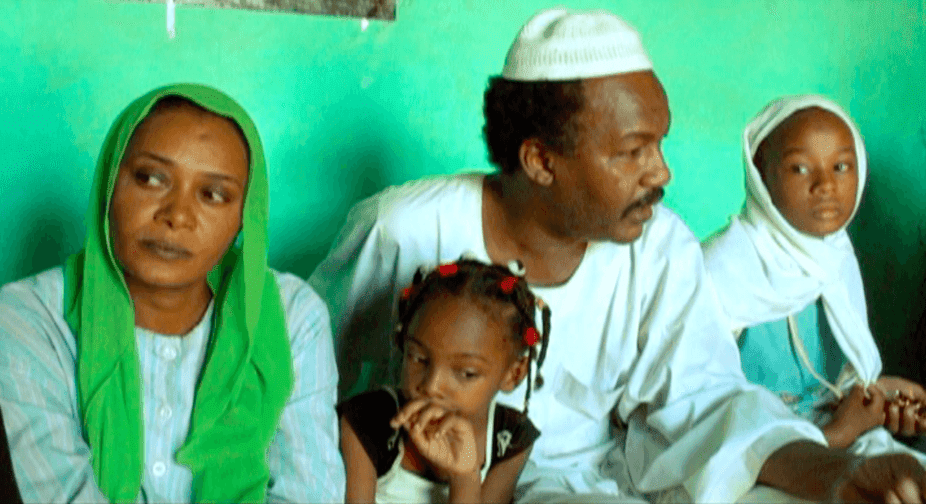
News: In Sudan, movies made by researchers change the way people see female genital cutting

Female genital cutting and the international response surrounding the practice represent incompatible cultures coming together in a shrinking world. According to UNICEF, in 2016, an estimated 200 million girls and women have been cut in 30 different countries.
Theconversation.com
Though an incomprehensible practice to some, cutting makes sense to people socialised in practising cultures. Whatever one’s cultural background, however, cutting arguably represents a violation of universal human rights that supersedes culture.

These alternate views place international agencies promoting the abandonment of cutting in a dilemma, trapped between conflicting commitments to cultural tolerance and universal human rights.

This dilemma is exacerbated by the common view that cutting is a locally pervasive practice based on a deeply entrenched social norm. An influential version of this view suggests that, where cutting is practised, families must match the local norm to ensure good marriage prospects for their daughters. When most families cut, under this view, incentives favour cutting. When most families do not cut, incentives favour not cutting. Incentives like this could be present because, for example, a family that deviates from the local norm is ostracised and hence their daughters cannot grow up to marry good husbands.

If correct, this view implies that abandoning cutting requires efforts that introduce or even impose foreign values onto a cutting society.
But a successful programme can change incentives in the marriage market by shifting a sufficiently large number of families away from cutting. Such a shift means that the incentives for families to coordinate with each other can switch from favouring cutting to favouring abandonment. Once this happens, the need for families to coordinate takes over and accelerates the process of abandonment.
My colleagues and I have been examining these ideas in Sudan, a country known for both a high overall cutting rate and extreme forms of the practice that bring risks of infection, haemorrhaging, and obstetric complications. Continue to full article

News credit: The Conversation
SHARE:

News: Deliberate efforts apace to tackle maternal and neonatal mortality

In the quest to reduce deaths and illnesses of women, children and families through a comprehensive approach commencing before pregnancy, a Safe Motherhood Strategy was introduced. This Strategy, which was implemented during the course of last year, came as part of the Ministry’s efforts to curb the maternal and neonatal mortality rate, which is in fact high on the agenda of the Ministry of Public Health.
BBC news
However, the major challenge faced in the execution of the Safe Motherhood Strategy last year was the depleted midwifery staff within the regions to adequately execute the programme.
This disclosure was recently made when the Public Health Ministry held its end of year press conference.
Moreover, intensified efforts are underway this year. Former Minister of Public Health, Dr. George Norton, had revealed that while approval of an Inter-American Development Bank (IDB) loan for the improvement of maternal and neonatal health was granted last year, this year measures will be fast-tracked in the area of Maternal and Child Health.
In 2015, there were 17 recorded maternal deaths, while in 2016 there were 12 recorded maternal deaths. Among the factors that could have aided this reduction, Minister Norton said, is the fact that there are more trained doctors in the Public Health system in the field of Obstetrics. “This has resulted in earlier diagnosis of complications,” asserted Dr. Norton.
This is due to the fact, the Minister said, that to date, some 75 percent of all Cuban-trained medical practitioners have been trained in ALARMS (Emergency Obstetrics Training). Forty more health care workers were trained in ALARMS in 2016.
The reduction in the number of maternal deaths can also be attributed to increased education and women being seen earlier in their pregnancy, Dr. Norton quipped.

Meanwhile, helping to reduce the number of neonatal deaths has been credited to deliberate collaboration between the public health sector and the Guyana Help the Kids (GHTK) Charity. This collaboration saw the commissioning of the Neonatal Intensive Care Unit (NICU) at the Bartica Regional Hospital in May of last year. Read more here

News Credit : Kaieteurnews
SHARE:

Sunday, 8 January 2017

Having a period is unaffordable in Kenya, yet no one wants to talk about it

Theguardian.com
When Michelle Tatu got her first period, she was afraid she was dying. Terrified, she stuffed bits of cloth and cotton inside herself to try and stem the bleeding.
Too frightened to tell her parents what was happening, she kept quiet. She spent her school day terrified blood would leak out, exposing her to ridicule from her classmates.
“At first I was so scared, I didn’t know what it was, I thought I had hurt myself,” exaplains Tatu over the din of a women’s rights march in Kibera, her home and one of Kenya’s largest slums. The march has been organised by non-profit The Cup, which provides menstrual cups to girls like Tatu. Click here to read
News Credit: TheGuardian
SHARE:

Job of the day

National Professional Officer (Family & Reproductive Health), Freetown, Sierra Leone
Closing date: Tuesday 31st Jan

OBJECTIVES OF THE PROGRAMME :
Under the guidance of the Technical Officer, (Reproductive & Maternal Health), the position will understudy, and provide technical assistance on a wide range of issues pertaining to RMNCAH. In close coordination with the maternal, child, nutrition, and ATM technical officers, assist the Ministry of health to plan, implement and monitor an effective RMNCAH programme, advocating an integrated primary health care approach.

As a response to the EVD outbreak of 2014/5, the Government of Sierra Leone developed the National Health Recovery Plan which is being implemented in phases. The initial 6-9 months focused on Getting to Zero and Transition from a full scale fight against EVD using the right-sizing approach. The second and current phase of the plan - the 10-24 month Presidential Recovery Plan - has prioritized accelerated reduction of the high burden of maternal and child mortality as one of the key result areas. Furthermore the Reproductive Newborn and Child Health Policy and Strategic Plans 2011-2015 which pre-dated the EVD outbreak are undergoing review, an exercise which will provide insights with respect to the factors of success that should be further facilitated, and remaining barriers and bottlenecks which should be urgently addressed to end preventable mortality and enhance the health of women, newborns, children and adolescents in Sierra Leone. Building and strengthening health systems remains an imperative for Sierra Leone, alongside assisting the Ministry of Health & Sanitation to plan, implement and monitor an effective RMNCAH programme at national and district levels, as part of the GOSL's basic package of essential health services.
Description of duties:
Under the supervision of the Technical Officer (Reproductive & Maternal Health), the Technical Officer, (Family and Reproductive Health) will:

1. Review and familiarize with national RMNCAH health policies, strategies, programmes and related legislation; major players; coordinating and TWG forums in order to plan and prioritize for the most effective coordinated delivery of technical assistance

2. Assist and advise the Directorate of RCH; the Directorate of Nursing and Midwifery; and as required the Directorates of Nutrition and Disease Prevention and Control; in the development of and implementation of strategies for RMNCAH including Family planning, Nutrition and PMTCT

3. Provide technical assistance in the development of operational plans and tools for RMNCAH and facilitate their dissemination and use

4. Establish effective partnerships and liaise with sister UN agencies and other partners to support the MoHS' convening and coordination function with key stakeholders and donor agencies, and provide coordinated technical assistance for RMNCAH including prevention of teenage pregnancy, and scale up of adolescent friendly sexual and reproductive health and rights

5. Collaborate in the facilitation and supervision of central and district level RMNCAH in-service and on-the-job trainings, with follow on quality supportive supervision, mentorship and corrective actions, in order to ensure that trainings are more effective and result in sustained positive changes in knowledge, competencies, attitudes and practices

6. Assist in the documentation and diffusion of lessons learned in RMNCAH programming; and promotion and implementation of operations research

7. Participate in monitoring and evaluation of RMNCAH programmes

8. Prepare fortnightly technical and quarterly progress reports against agreed detailed work plan milestones

9. Perform all other related duties as assigned.
Education:
Essential: University degree in Medicine, Nursing or any other Clinical discipline

Desirable: Master's degree in Public Health from a recognized University or College.

Verification of Educational qualifications:

"In the event that your candidature is retained for an interview, you will be required to provide, in advance, a scanned copy of the degree(s)/diploma(s)/certificate(s) required for this position. WHO only considers higher educational qualifications obtained from an institution accredited/recognized in the World Higher Education Database (WHED), a list updated by the International Association of Universities (IAU) / United Nations Educational, Scientific and Cultural Organization (UNESCO). The list can be accessed through the link: http://www.whed.net/. Some professional certificates may not appear in the WHED and these will be reviewed individually".
Skills: 
 Strong technical skills and knowledge in the area of Midwifery
 Skills and ability to timely synthesize key components and working group outputs.
 Ability to build and promote partnerships across the organization and beyond.
 Demonstrated ability to produce results, while respecting WHO's professional, ethical and legal framework
Experience:
Essential: At least 7 years' of experience in Clinical practice

Desirable: Three years at the international level especially in low and middle-income countries. Experience working scaling up delivery of public health programmes at decentralized levels 
Additional Information:
WHO offers an attractive compensation package including an annual net salary (subject to mandatory deductions for pension contributions and health insurance), dependency benefits, pension plan, health insurance scheme, and 30 days annual leave.

Please visit the following websites for detailed information on working with WHO:

http://www.who.int Click on: . to learn more about WHO's operations
http://icsc.un.org Click on: Quick Links > Salary Scales > by date

Candidates will be contacted only if they are under serious consideration.

Position for Sierra Leone national only.


SHARE:
© Natasha's Risk Watch. All rights reserved.
Blogger Designs by pipdig